Church of St. Petka (Paraskeva of the Balkans)
Location: Jalovik Izvor
Year of construction: 1868.
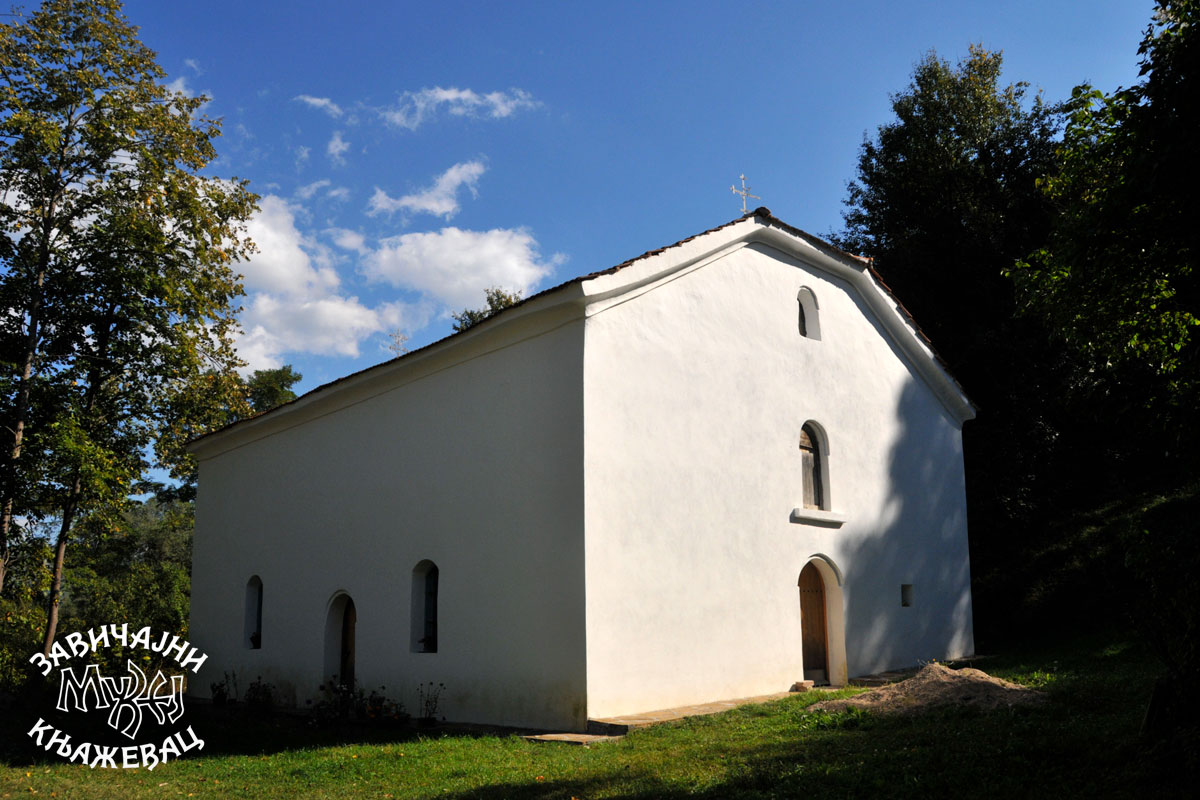
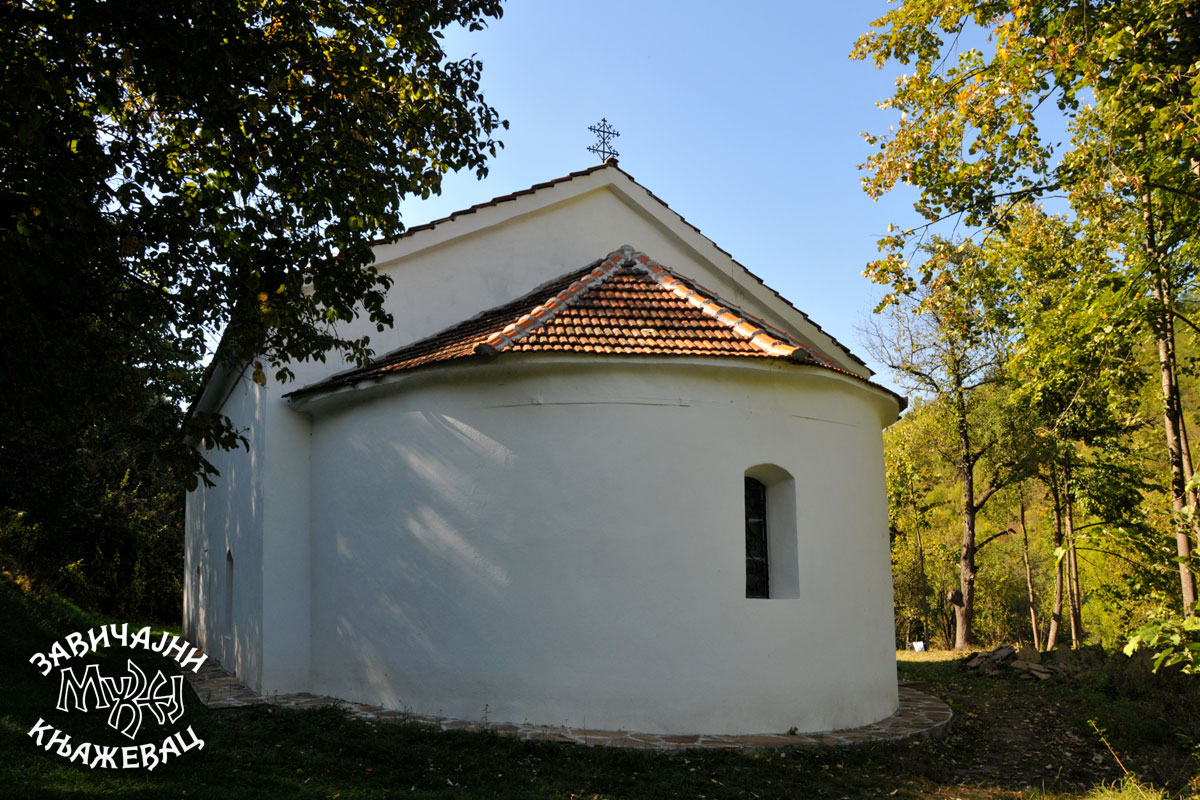
The dedicated to St. Petka is located on a raised plateau, on the right bank of the Izvorska River, whose source is nearby.
North-west of the church is the belfry, the lower part of which is built of stone, and the upper part of post and petrail.
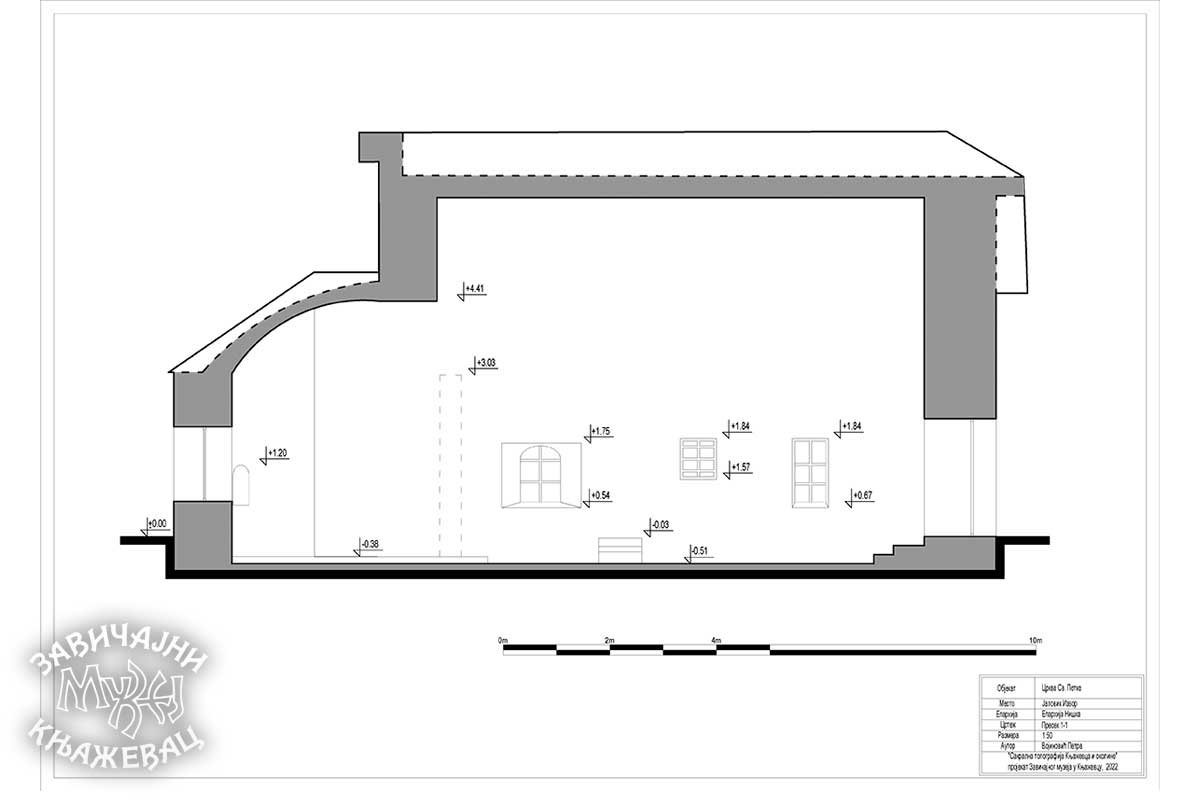
The church is partially buried. A pair of semicircular steps leads into the nave of the church. The floor is paved with stone.
The church has been renovated several times, and the last time around 2012, when the iconostasis was replaced and a large number of icons and part of the altar partition were destroyed. A path made of stone from Temska was laid around the church, in order to prevent the penetration of moisture into the foundations of the church, and the roof was redone.

It has been is recorded that in this church around 1912-1915 served priest Stanko Kostić, originally from the village of Maleš near Debar, and that he came to Serbia with master masons from the vicinity of Debar, and finished the Seminary in Belgrade. After he was killed by the Bulgarians, his son Živko Popović replaced him as parish priest of Jalovik Izvor.
Gallery
Architecture
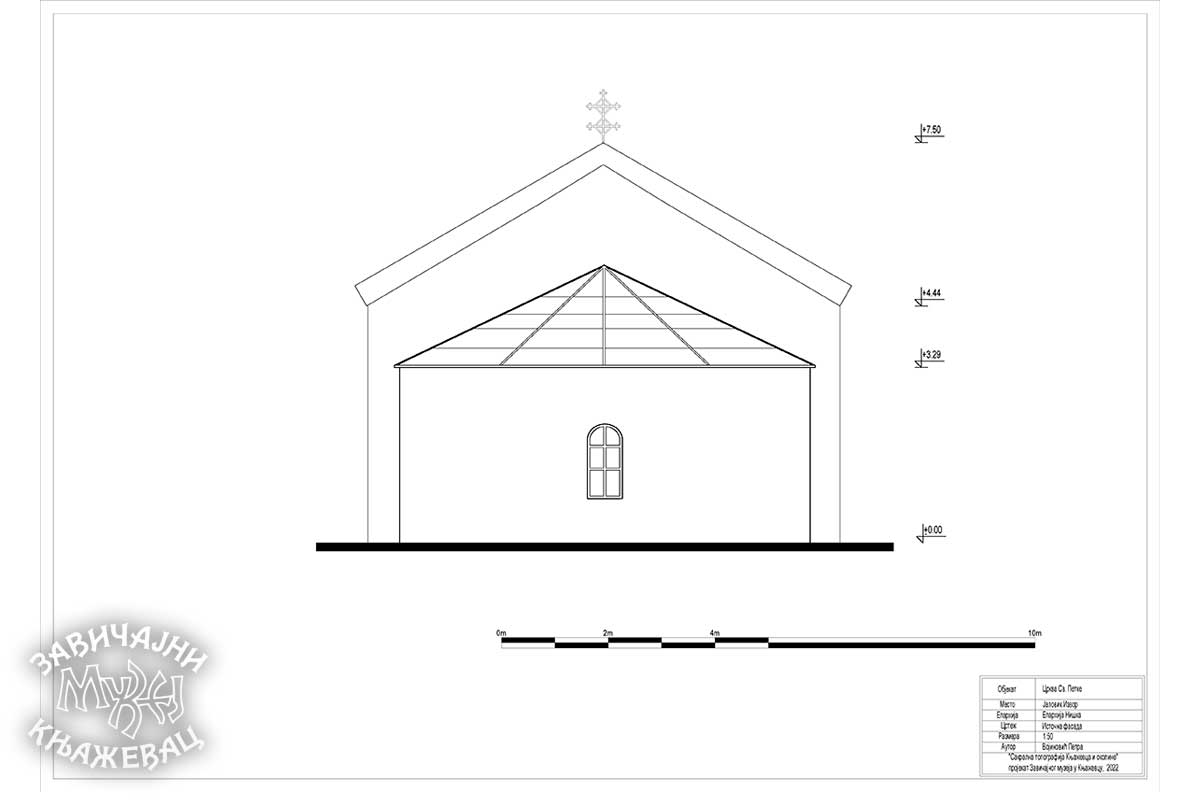
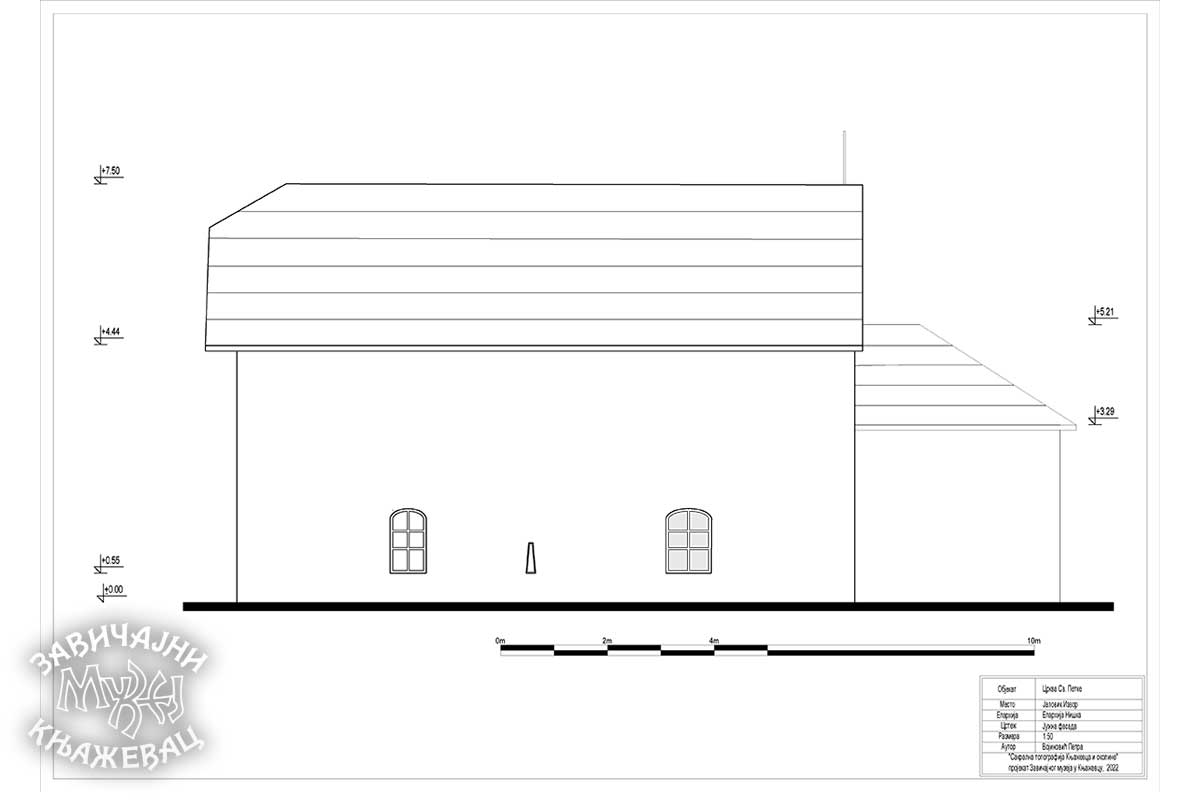
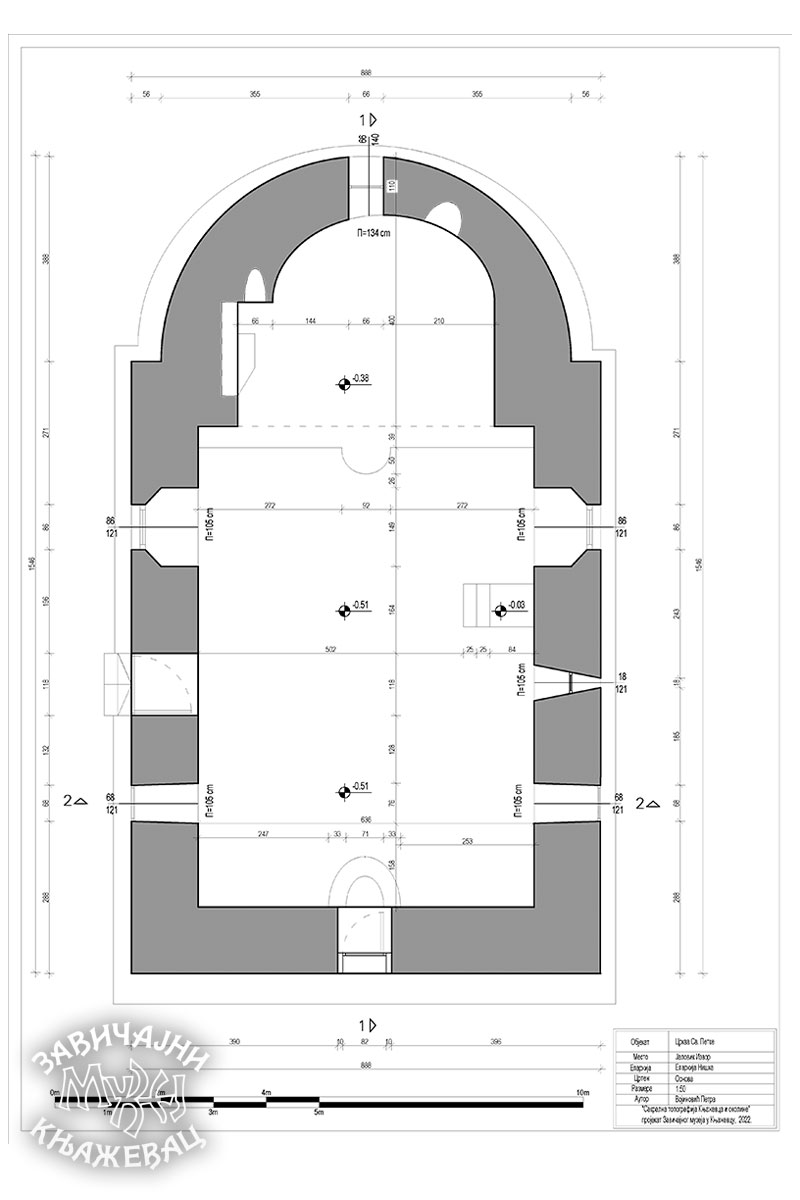
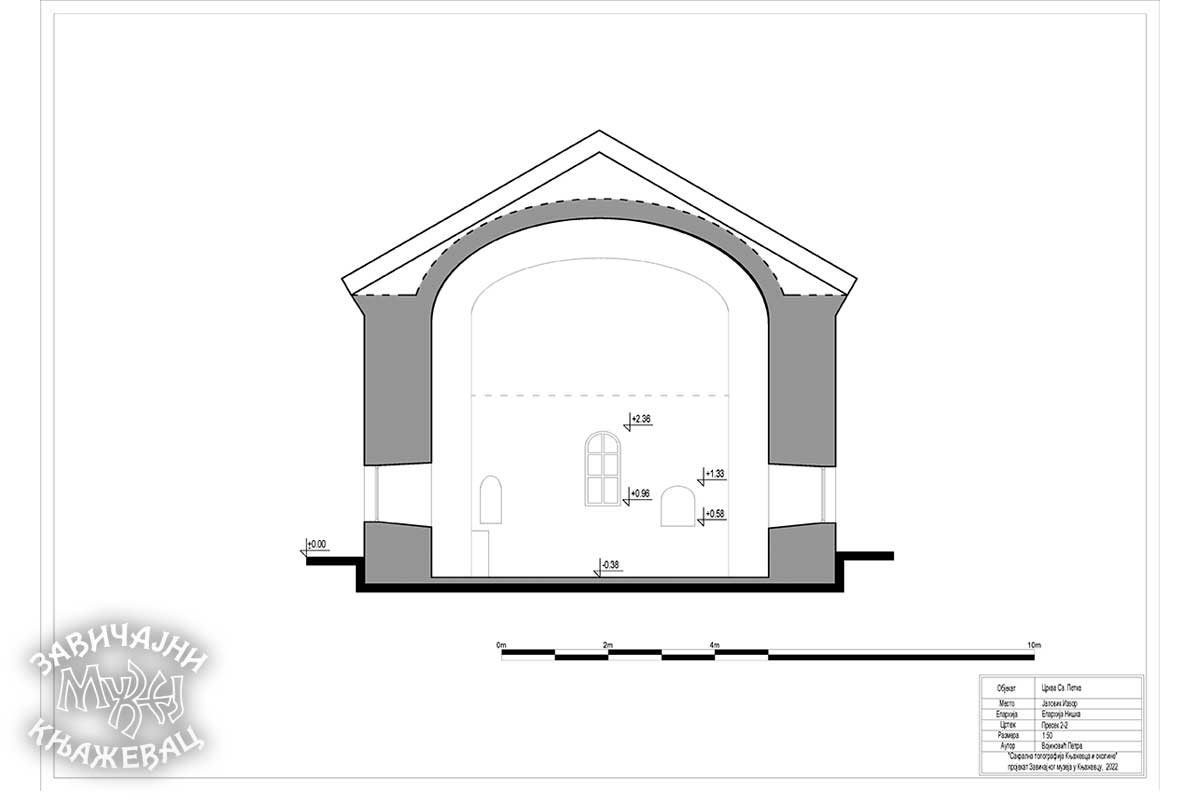
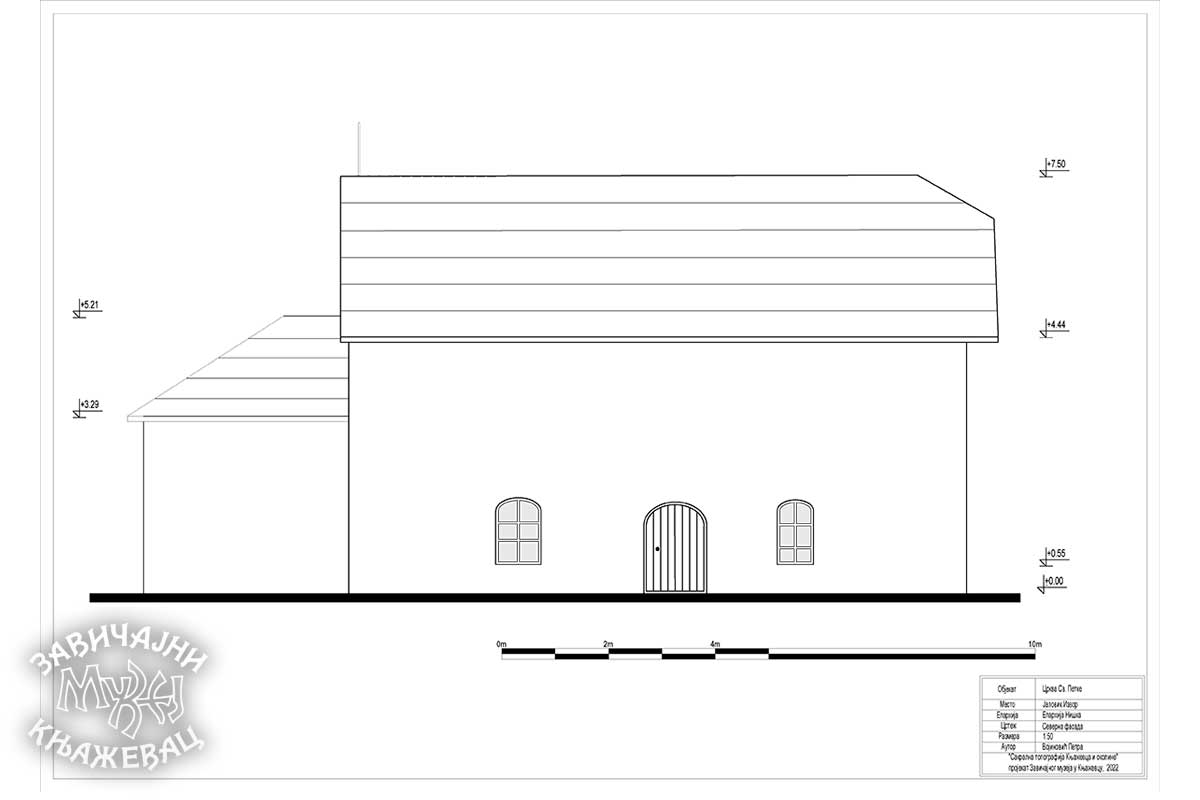
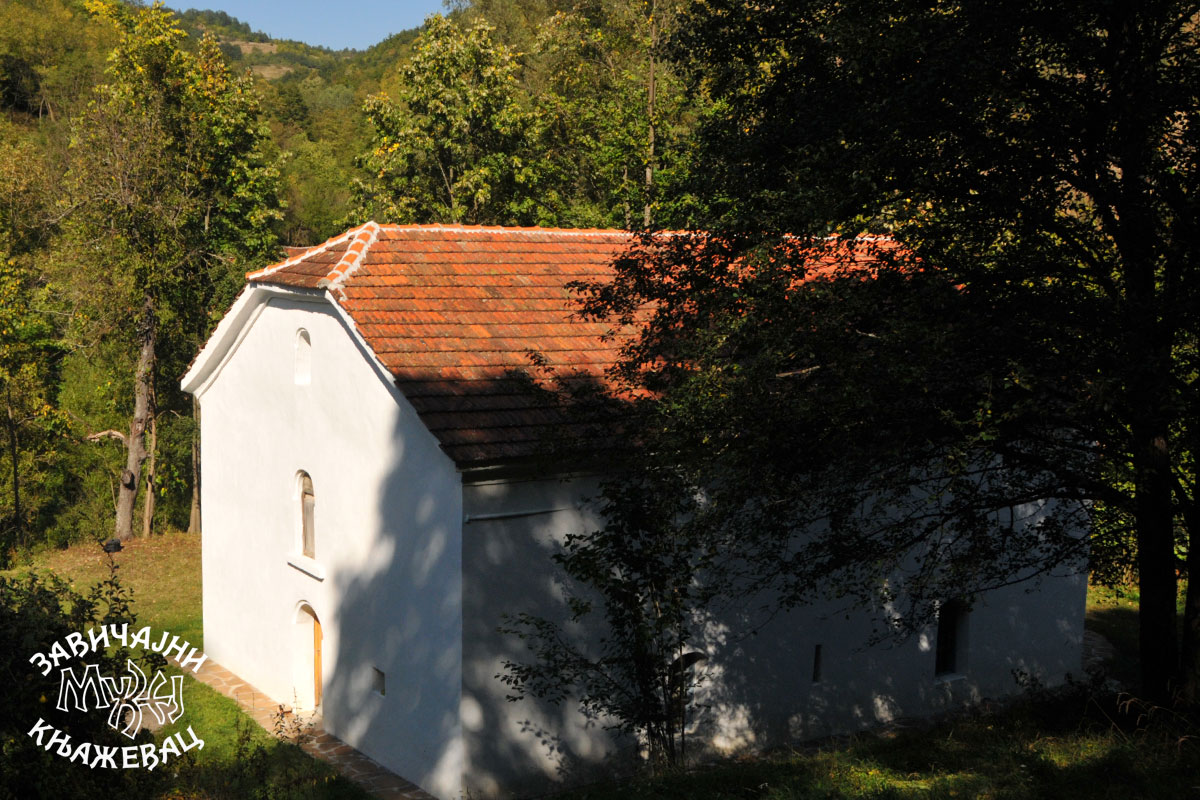
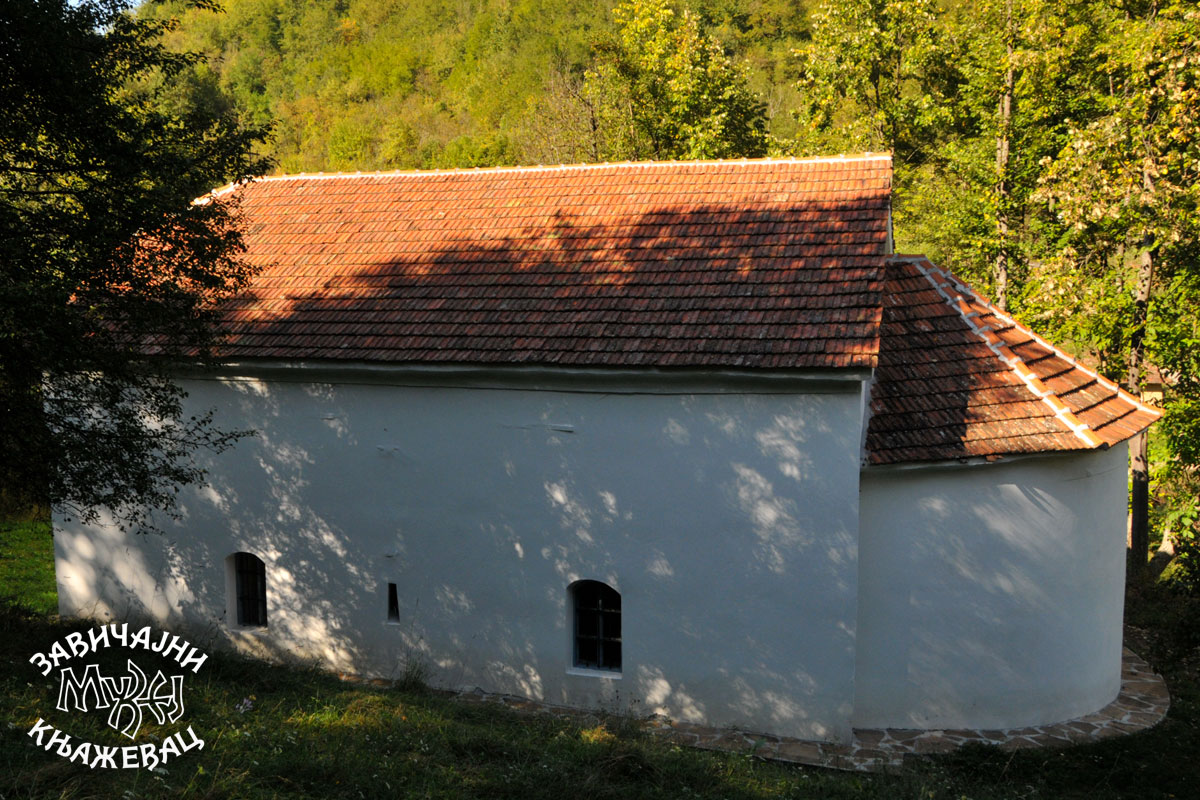
The church in Jalovik Izvor was built in 1860 or 1868. It was built of stone, plastered and painted white inside and out. It has a foundation of single-nave longitudinal, building covered with a gabled roof made of tiles. The church is vaulted with a semi-circular vault.
The interior of the church consists of an altar area in the east and a spacious nave. At the eastern end of the church there is a wide altar apse, somewhat narrower than the nave of the church, and lower than the roof of the church, covered with a tiled roof. In the altar apse, on the north and south sides, there are shallow niches for the diaconicon and proskomedia.
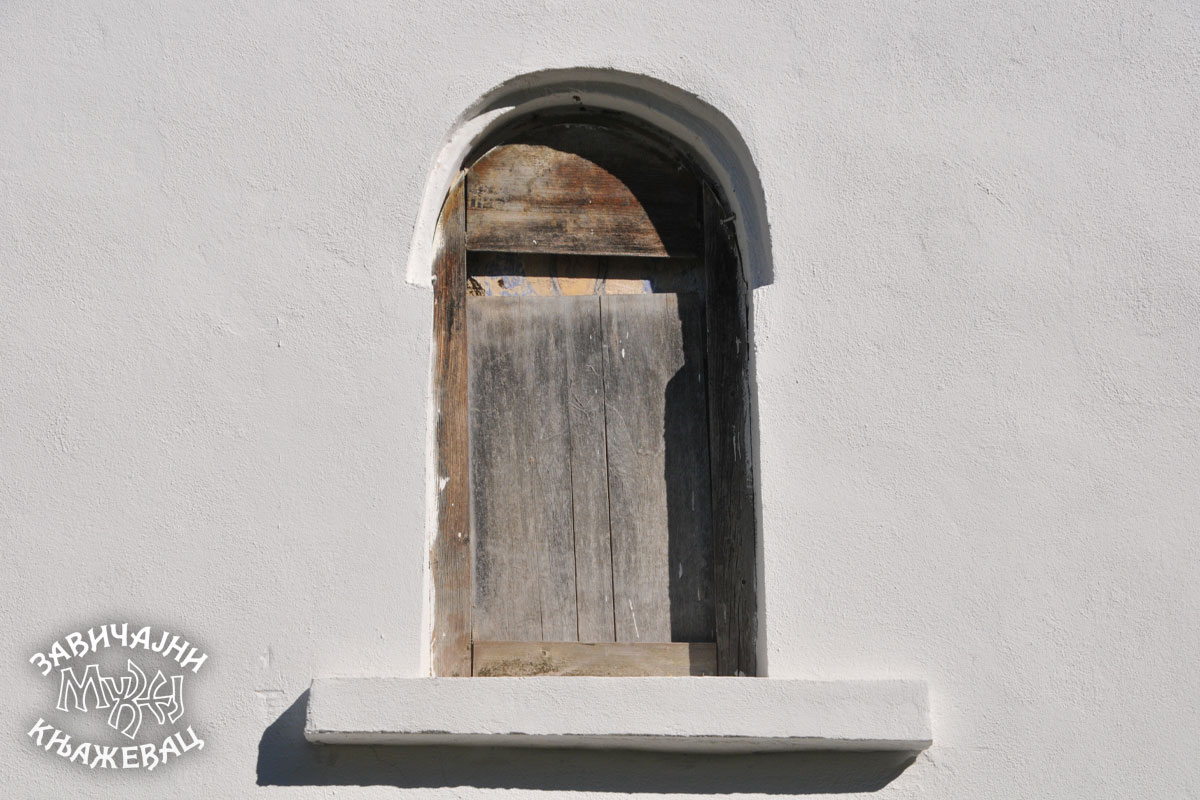
The exterior facade of the church is simple. Under the roof, iron weights can be seen in the higher areas. On the south wall are two simple window openings, with a narrow oblong opening in the wall between them.
On the north wall, in addition to two simple window openings, there is also a side door.
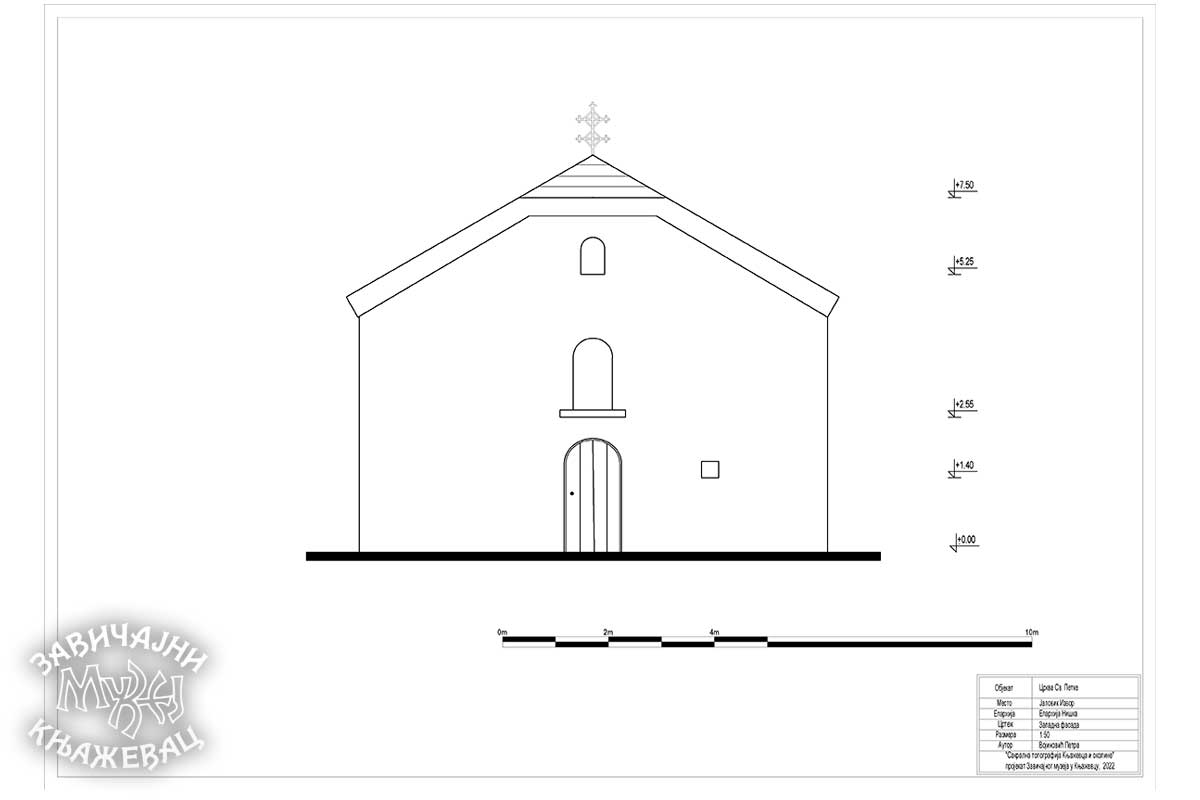
On the western facade, above the entrance door to the church, there is an arched niche where a fresco-icon of St. Petka Paraskeva partially hidden by boards on which the icon of St. Petka was pained in the past.
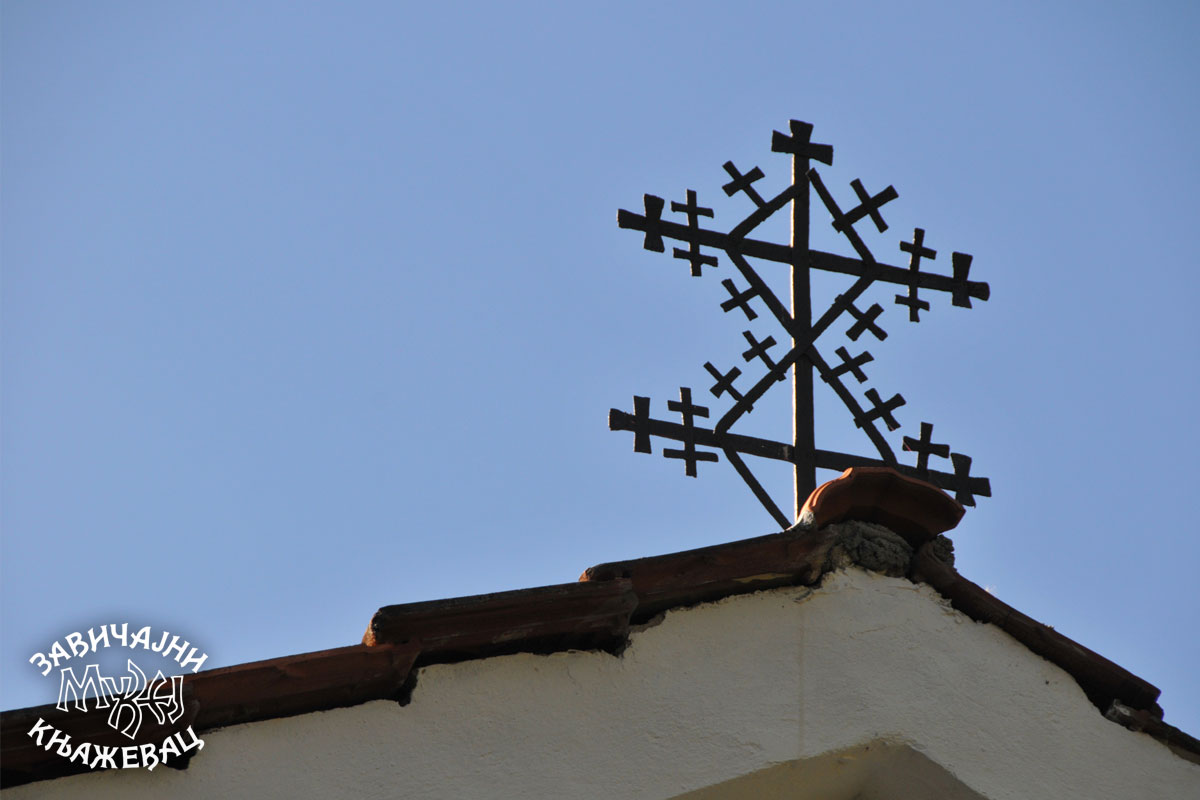
Above this niche, just below the broken peak of the roof covering, is a simple window opening.
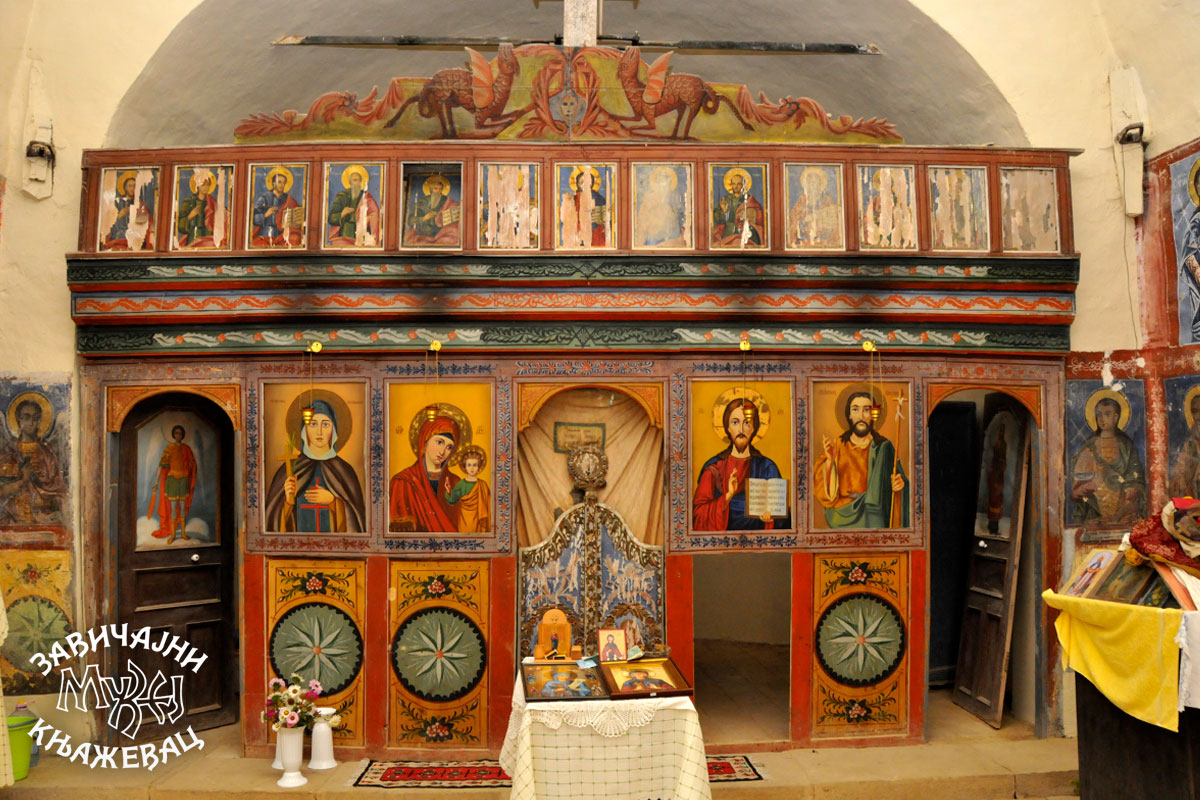
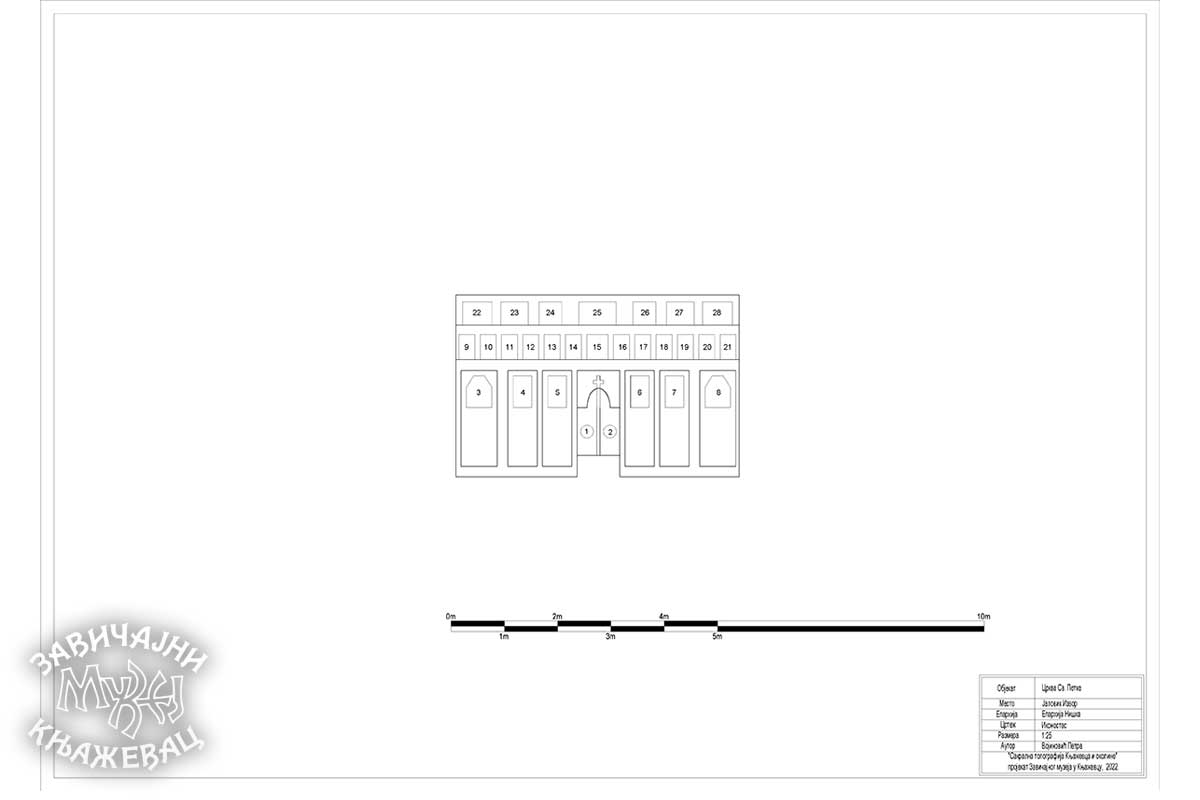
The simple altar partition is divided horizontally into three zones. The lowest zone belongs to the richly decorated geometric and floral fields of parapet panels, the royal doors with the representation of the Annunciation, richly decorated, as well as the row next to the throne icons. On the north door there is an icon on canvas of St. Archangel Michael, then the throne icons of St. Petka Paraskeva, the Holy Mother of God, Jesus Christ and St. John the Baptist, while on the south door is the icon of St. Archdeacon Stephen.
Only the icons in the zone of throne icons were made with oil on canvas, while the others were made with egg tempera on a board. In the higher, second zone is the apostolic row with twelve icons of St. apostles left and right arranged around the central representation of Jesus Christ. In the highest zone, the Crucifixion is placed in the center, under which there are representations of winged dragons. Today’s iconostasis differs greatly from the original one and has a changed arrangement of icons that are more recent and of very dubious quality.
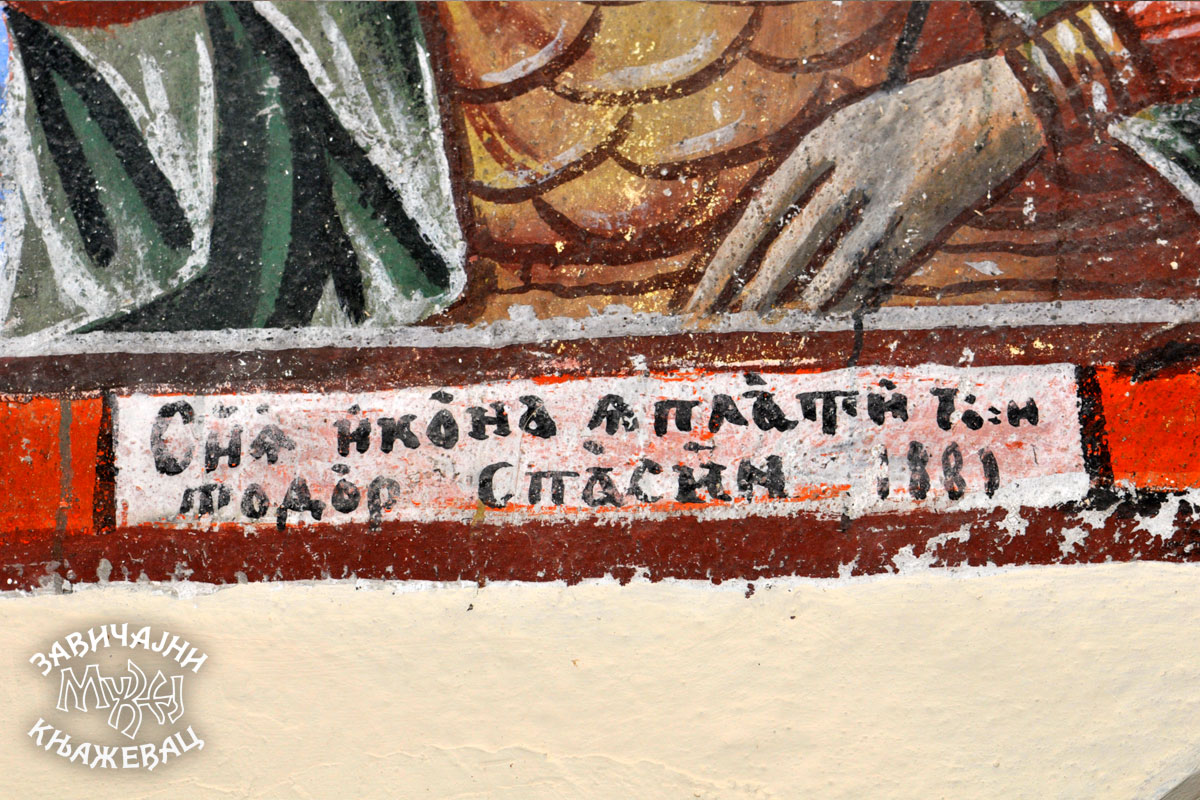
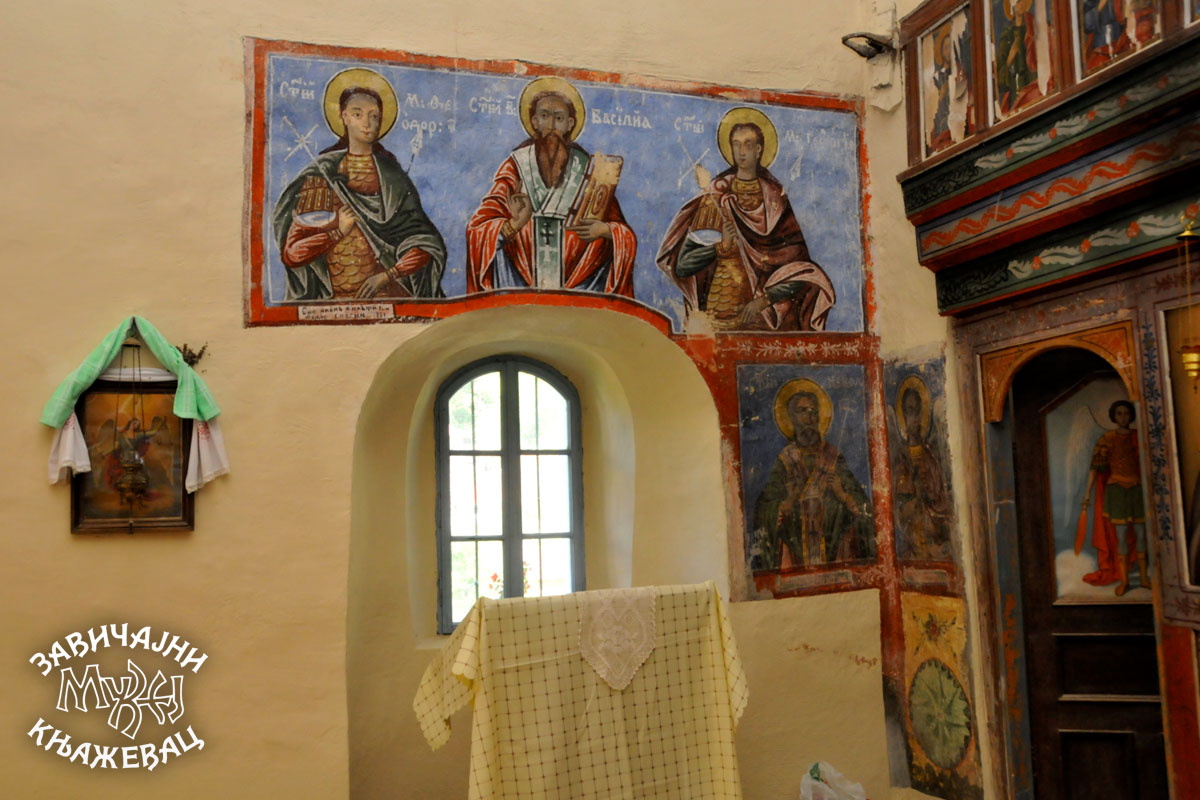
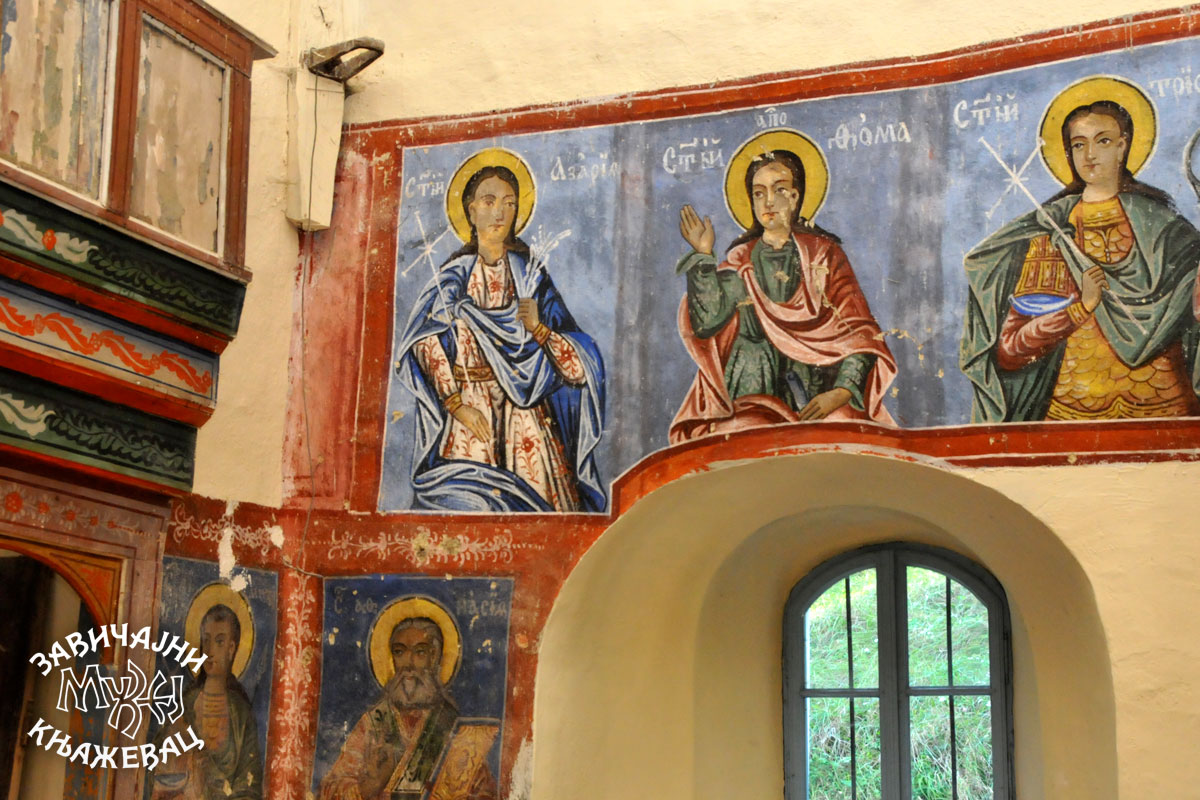
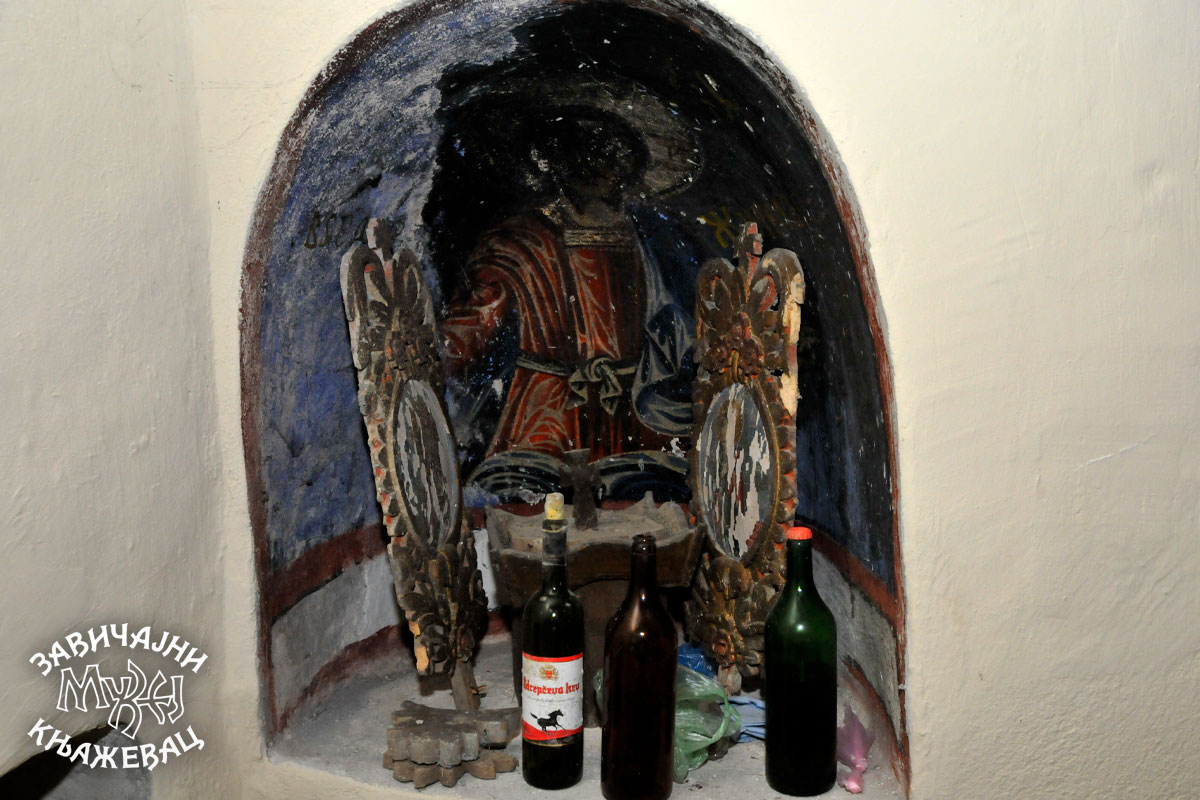
The church has not been painted with icons, but on the south and north walls, next to the iconostasis, there are fresco-icons made with egg tempera. The proscomidia niche is colorful. In it there is a representation of Christ the Almighty.
On the southeastern wall, next to the iconostasis itself, in the extension of the row of throne icons, there is a representation of St. Demetrius, under whom the field is painted in the same way as the parapet panels of the iconostasis. On the southeast wall, there are representations of saints in two zones, and in the upper zone, representations of three saints St. Prophet Azaria, St. Apostle Thomas and St. Tryphon, and in the lower St. Athanasius.
On the northeast wall next to the iconostasis is a representation of St. Archangel Michael, under whom the field is painted like the field of the parapet panels of the iconostasis. On the northeast wall, there are also representations of saints in two zones, namely in the upper zone representations of three saints St. George, St. Basil the Great and St. Theodore, and in the lower one there is a representation of St. Nicholas. All the fresco-icons along the lower edge have a dedication, and all are a gift from the contributor. They are dated in 1881. The names of the master fresco painters are not known.