Church of the Assumption of the Holy Mother of God
Location: Minićevo
Year of construction: 1925.
The construction of the church in Minićevo began in 1914, but it stopped due to war troubles. It was completed in 1925 when it was consecrated by Bishop Emilijan of Timok. It is dedicated to the Assumption of the Holy Mother of God.
In the church, on the northwestern pilaster, there is a memorial plaque dedicated to fallen comrades for the freedom, glory and greatness of the fatherland, erected by the Timok Teachers’ Association in November 1926.
In 2000, thanks to the efforts of the parish priest Dragoslav Pavlović, the church was restored.

On that occasion, the interior lighting was made and the accompanying buildings in the yard were renovated (priests’ house, auxiliary building – former stable and hayloft, the well, etc. Today, the churchyard is extremely large and beautifully decorated.
On the church, as a contribution of the Jovanović family in 2008, the entrance door was replaced, and in front of the churchyard, to the right of the entrance gate, a stone fountain by Viden Jeremić was built in 1989. In 2011, new gutters and repainted roof sheets were installed, and in 2013, the iconostasis was gilded.
Gallery


Architecture
The church is a one-nave building, whose external form creates the impression of a central type building. It is built of stone and brick, plastered outside and inside. The church is vaulted with a semi-circular vault, and the gabled roof is covered with sheet metal, in the higher areas above the central trave and on the dome, it is segmented into several parts. The facade is painted white, while the outlets above the entrance and window openings are painted red.
It was built in the Serbian-Byzantine style. It consists of three traves, the central one is slightly wider than the western and eastern ones, giving the impression of a cross-shaped base from the outside, which is contributed by the gradual elevation of the roof surfaces and the centrally placed high, octagonal dome.
On the eastern side of the church, there is an apse, five-sided on the outside, and semicircular on the inside, vaulted with a semi-dome.
On the south wall of the church, there is another entrance of the same structure as the main one on the west, in front of which a porch with massive columns connected by arches were built.
Above the western trave, there is a wooden gallery, which is reached by wooden stairs placed south of the entrance door. On the western facade, there is a simple entrance to the church, highlighted by red-colored shallow drains, to which a smaller polygonal staircase leads.
Above the entrance, there is a window with five openings, above which is a shallow blind niche vaulted with a broken arch, in which the square outlets are painted in red color.

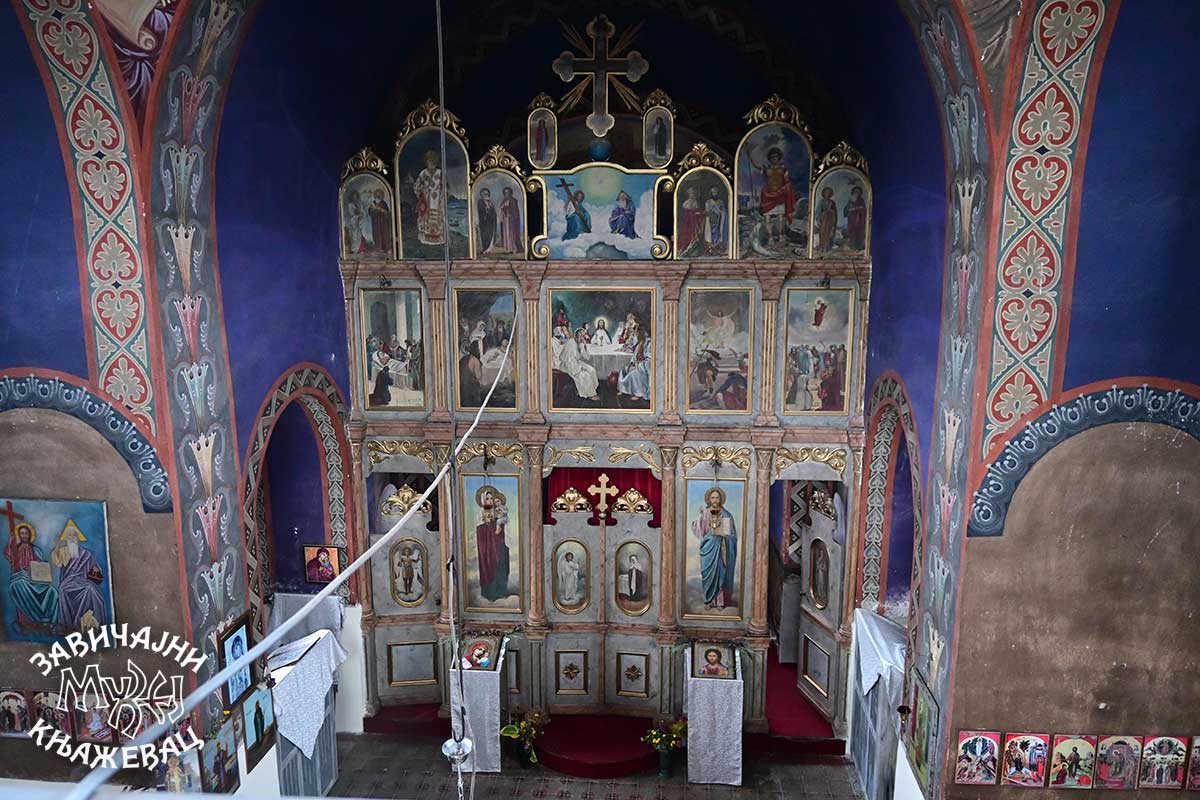


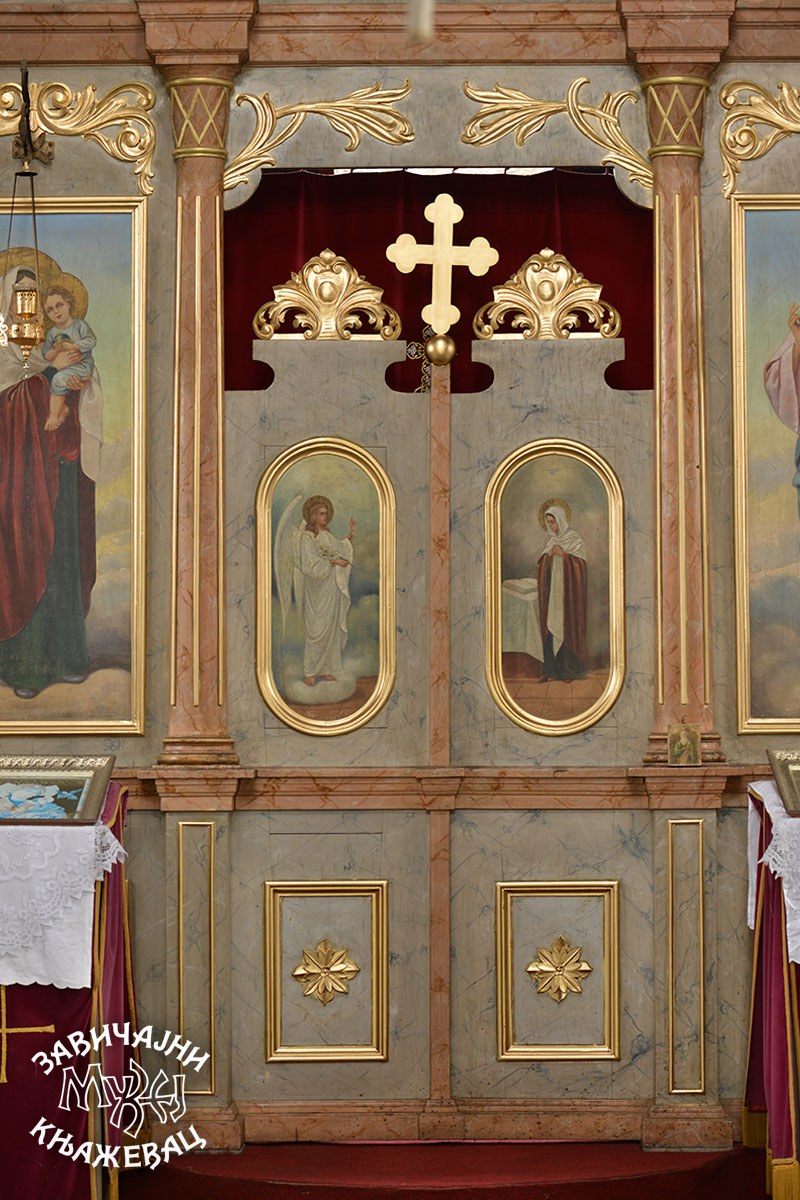
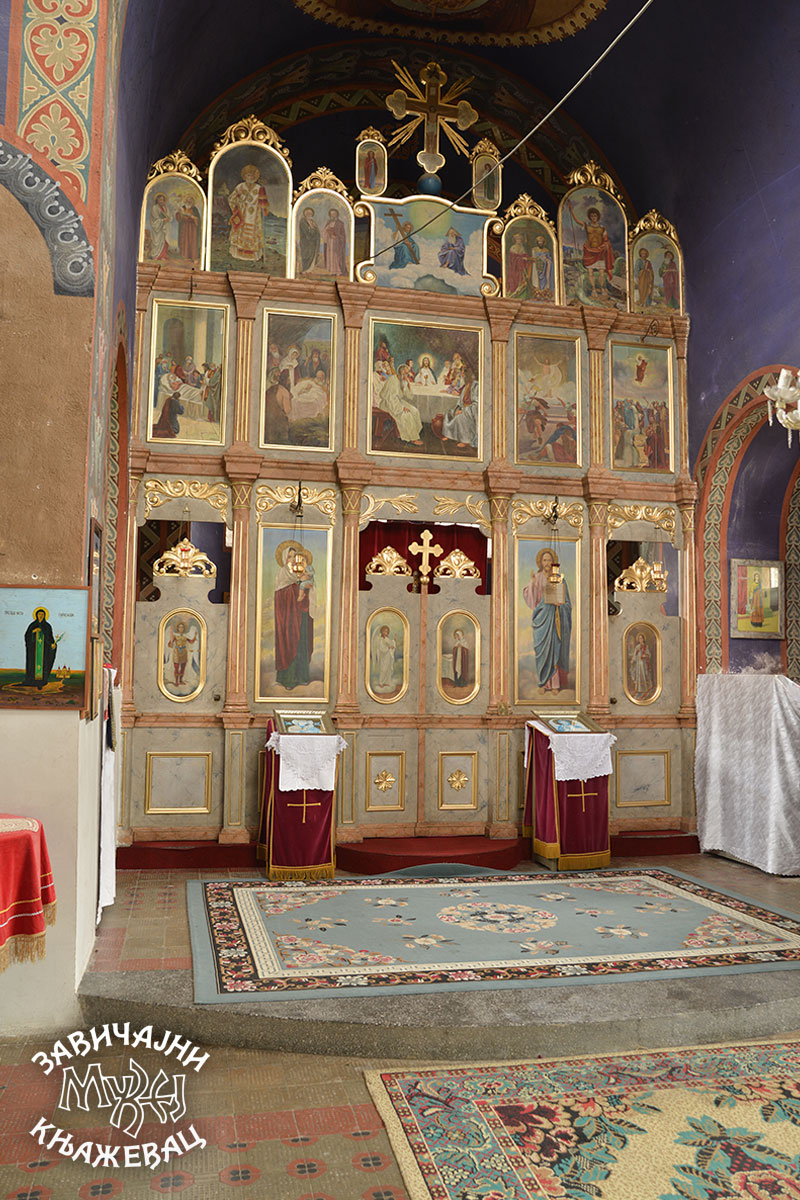

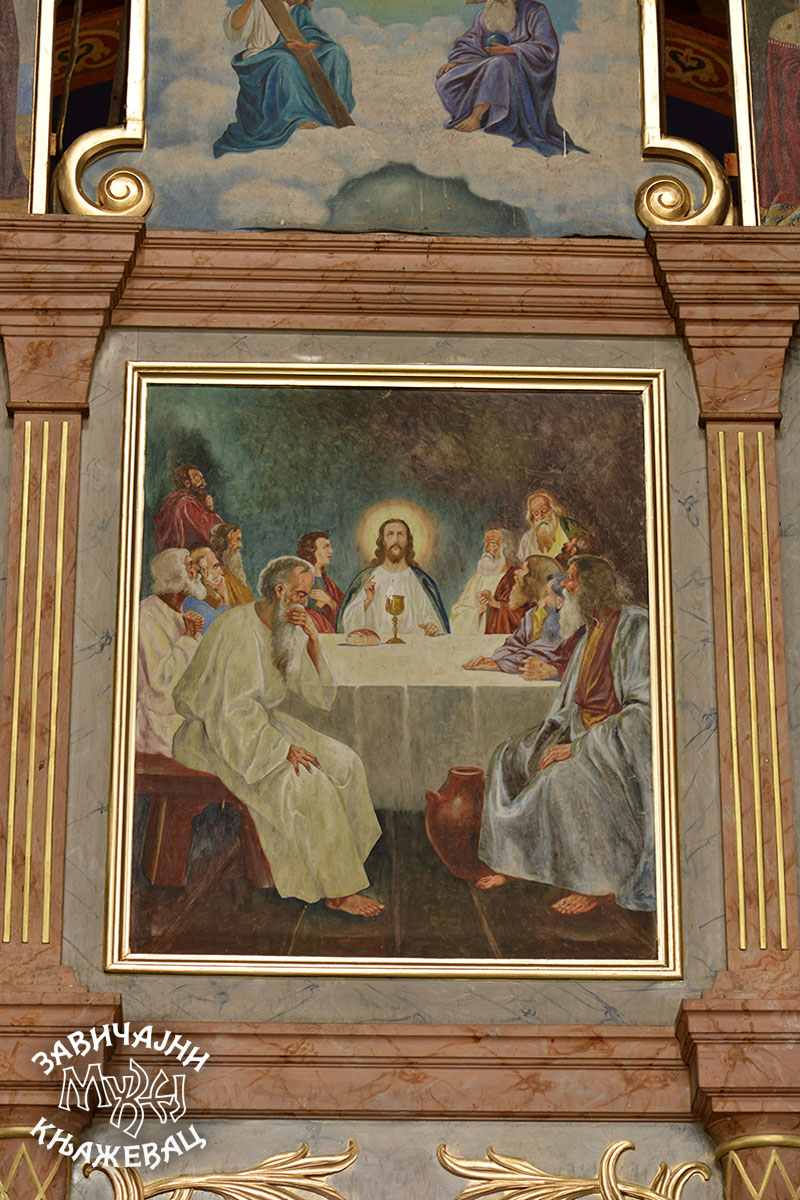


The iconostasis of the church was made in 1925, and it is the work of the workshop Ivković from Novi Sad. Richly decorated and very well made. The wooden altar partition is marbled, and some decorative elements are gilded. It rises to the very vault above the altar apse, and is divided horizontally into three zones by cordon wreaths.
The vertical division is highlighted by blind columns and pilasters in the upper zone. In the lowest zone, the parapet panels are modestly decorated. In the first zone, on the northern side doors, there is a representation of St. Archangel Michael, then throne icons of the Blessed Virgin Mary with Christ and an icon of Jesus Christ, the Annunciation is shown on the royal doors, and on the southern doors is a representation of St. Archdeacon Stephen.
The second zone consists of five icons: Assumption of the Blessed Virgin Mary, Adoration of the Magi, the Last Supper, Resurrection and Transfiguration. In the highest zone, there are icons of apostles and evangelists St. Mark and St. Matthew, then St. Nicholas, the apostle St. Peter and St. Paul, icons of the Holy Trinity, Saint Emperor Constantine and Empress Helena, Saint George, apostles and evangelists St. Luke and St. John. Above the Holy Trinity are representations of the Virgin Mary and Saint John the Theologian, between which the Crucifixion is placed in the center.


The interior of the church is painted dark blue. Decorative, painted and gilded bands in the form of heart-shaped interweaving combined with geometric ornaments and floral motifs reflect the architectural structure of the church as well as the edges of the vaults.
On the vault of the apse, presented in a medallion, there are waist-length figures of the Holy Mother of God and Christ the Child in a prayerful position.
There are no paintings on the south and west walls, and on the north wall, there are representations of the Holy Three Hierarchs, Basil the Great, Gregory the Theologian and John Chrysostom. In the dome is Christ the Pantocrator, on the pendants are shown the Evangelists with a book, i.e. a scroll and a feather.